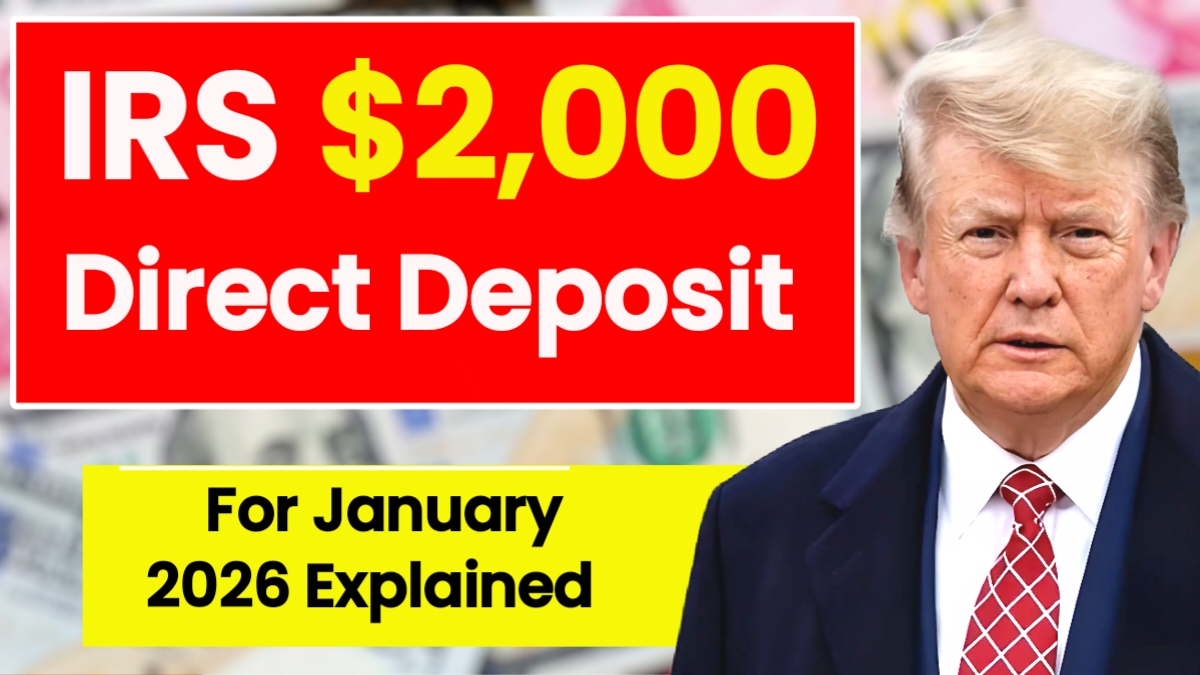
IRS $2,000 Direct Deposit for January: In recent weeks, headlines and social media posts claiming an “IRS $2,000 direct deposit” coming in January 2026 have gone viral across search engines, YouTube, and news feeds. Many Americans are understandably paying close attention, especially as rising living costs, debt pressure, and uncertainty around benefits continue into the new year. The idea of a fresh federal payment arriving early in 2026 has sparked widespread interest, confusion, and hope.
The claims suggest that the Internal Revenue Service has confirmed a $2,000 payment, with direct deposits scheduled for January 2026 and eligibility already decided. However, these reports mix speculation with official-sounding language, making it difficult for readers to separate facts from assumptions. This matters because inaccurate financial information can lead to poor planning, false expectations, and even scams targeting vulnerable people.
This article explains what has actually been confirmed, what has not, and why January 2026 keeps appearing in payment rumors. It provides a clear fact check on the IRS $2,000 direct deposit claims, outlines how federal payments are normally approved, and explains what Americans should rely on when tracking legitimate IRS announcements.
यह भी पढ़े:
 IRS Confirms $2,000 Direct Deposit for January, 2026 – New Payment Dates and Eligibility Guide
Has the IRS Approved a $2,000 Payment for January 2026
The short answer is no. The IRS has not approved, announced, or scheduled a $2,000 direct deposit for January 2026. While the agency plays a key role in distributing payments, it only acts after laws are passed by Congress. Without legislation, there is no payment program to administer.
In past relief efforts, such as pandemic-era stimulus checks, the approval process involved months of public debate, formal votes, and clear announcements from multiple federal departments. None of those signals exist today. Any article or video claiming the IRS has already “confirmed” payments is misrepresenting how the federal system works.
Why January 2026 Keeps Appearing in Payment Rumors
January is often used in payment rumors because it coincides with the start of the tax filing season, annual benefit adjustments, and new fiscal planning periods. These routine government activities are predictable and public, which makes them easy to misinterpret or exaggerate online.

In many cases, content creators link normal IRS refund timelines or benefit updates to unrelated payment claims. Over time, repeated mentions of January 2026 create the illusion of confirmation, even when no official announcement exists. This pattern has appeared repeatedly with false stimulus rumors in previous years.
Eligibility Expectations If a Federal Payment Were Approved
Because no $2,000 payment has been authorized, there are no official eligibility rules. However, if Congress were to approve a new federal payment, it would likely follow patterns seen in earlier relief programs. These often focused on low- and middle-income households, retirees on fixed incomes, and individuals with recent tax filings.
Higher-income earners could face phase-outs or exclusions, depending on adjusted gross income and filing status. Still, it is important to stress that these are only general expectations based on history. Until legislation exists, no eligibility criteria are real or enforceable.
यह भी पढ़े:
 $2000 Federal Direct Deposit Payment Coming in January 2026: Complete Guide for Eligible Americans
Payment Dates, Claim Process, and Scam Warnings
There are currently no payment dates because there is no approved payment. When legitimate federal payments are created, the IRS publishes clear schedules and detailed instructions on official government platforms. Any website listing exact January 2026 payout dates without official citations is speculating.
Similarly, there is no application or claim process for a $2,000 payment. The IRS does not charge fees or ask taxpayers to “sign up” for stimulus checks. Americans should be cautious of sites or messages requesting bank details or payments, as these are common signs of misinformation or scams.
What the IRS Is Actually Paying in Early 2026
In early 2026, the IRS will be focused on issuing regular tax refunds, processing returns, and administering refundable tax credits that are already part of existing law. These payments depend on individual tax situations and filing accuracy, not viral announcements.

Some taxpayers may see deposits in January due to early filings or delayed credits from previous years. However, these are not new stimulus payments. Understanding this distinction helps prevent confusion and ensures realistic financial planning.
Disclaimer: This article is for informational and educational purposes only. It is based on publicly available information and does not represent official IRS or government guidance. Readers should verify all payment-related updates through official government websites or trusted authorities before making financial decisions.